Choosing an LED Wall for Your Event: When It Beats a Projector
LED walls cost more to hire than projectors but solve problems projectors cannot. Here is when the upgrade is worth it and when it is overkill.
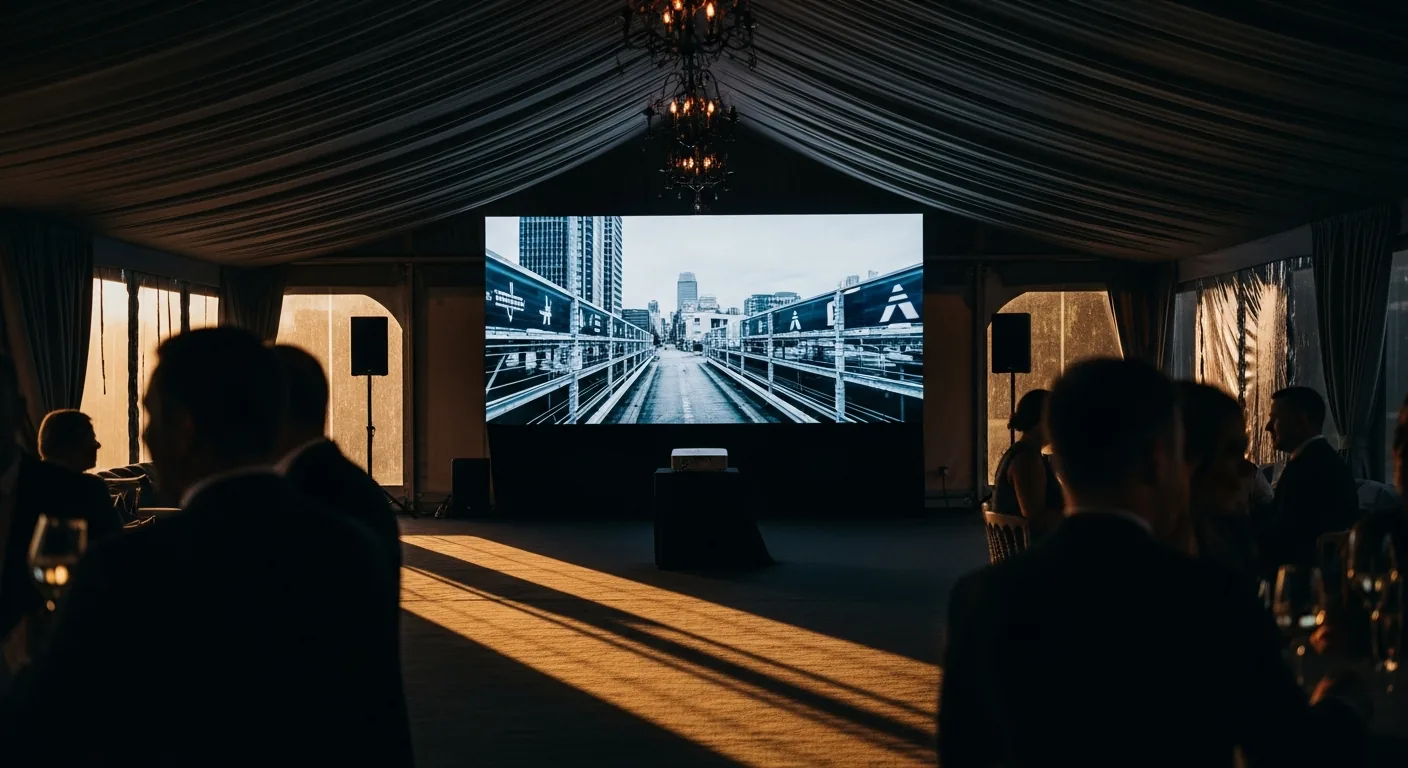
You’re planning an event and need a big screen. The first thought for many is a projector, but that’s a mistake we see all the time, especially for events in Sydney. Any amount of ambient light, from a marquee window at a Bronte wedding to the afternoon sun hitting a rooftop bar in Double Bay, can wash out a projector image completely. This is where an LED video wall isn't just a better option; it's often the only professional option that works.
Light is Your Enemy (And the LED Wall's Best Friend)
The single biggest factor that kills a projected image is light. Not just direct sunlight, but any ambient light in the room. A projector works by throwing a relatively weak beam of light onto a passive surface. Any other light source in the room competes with that beam, reducing contrast and making the image look faded and unprofessional. We’ve seen it happen at corporate conferences in sunlit CBD offices and at 50th birthday parties in restaurant courtyards in Coogee. The client spends money on a screen that nobody can properly see.
An LED wall is the complete opposite. It is its own light source, made of thousands of incredibly bright pixels. It doesn't compete with ambient light; it punches right through it. Think of it like your phone screen or a TV. You can see it perfectly on a bright day because the screen itself is generating the light. This makes our LED video wall hire the go-to solution for any event that isn't in a perfectly blacked-out room. For an outdoor cinema night in a Tamarama backyard, a product launch in a glass-walled venue in Rose Bay, or a daytime presentation at a company Christmas party, the LED wall delivers a brilliant image every time. A standard Epson Full HD projector simply can't compete.
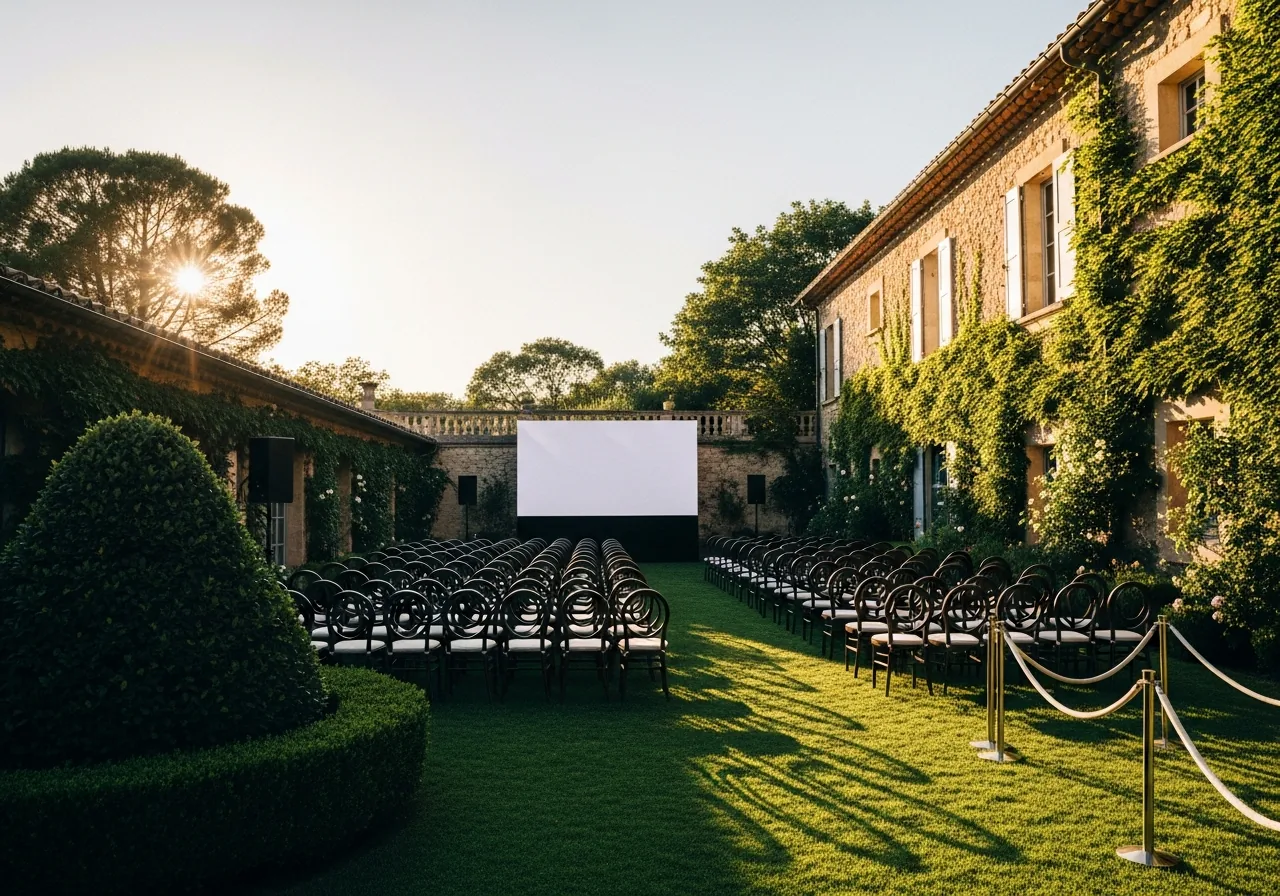
Our rule of thumb is this: if you can't make the room pitch black, don't hire a projector. Even a single bright downlight, a well-lit bar, or an exit sign can ruin the contrast. For any daytime event, or any evening event where you need the house lights on for safety or atmosphere, an LED wall is the only choice that guarantees a vibrant, clear picture.
Demand Brilliant Colour and True Black
Beyond brightness, the next conversation is about image quality. A projector is only as good as the surface it’s hitting. A portable screen is never perfectly flat, and a painted wall in a community hall or surf club is never perfectly white. These imperfections affect focus, colour accuracy, and contrast. The "black" in a projected image is just the absence of light, meaning it’s really just the colour of the wall in shadow. It looks grey and washed out.
An LED wall produces true, deep black because the individual pixels can be turned off completely. This creates an incredible contrast ratio that makes colours pop. If you're displaying a carefully crafted brand presentation, a wedding slideshow full of rich photos, or a film screening, this difference is enormous. The colours are exactly as your designer or videographer intended, with no colour cast from an off-white wall. The image is sharp from edge to edge, with no soft focus or distortion. For clients who care about visual impact, this is non-negotiable.
Forget Fixed Sizes: Build the Screen Your Space Demands
Projectors are restrictive. They have a fixed aspect ratio, usually 16:9, and you are limited by the "throw distance" required to fill the screen. This can be a real problem in the unique venues we work in across Sydney's Eastern Suburbs. A narrow terrace in Paddington might not have the depth for a projector, or a low ceiling in a marquee might mean the projector itself gets in the way, casting shadows every time a guest walks past.
LED walls are modular. They are built from smaller panels, typically 500mm x 500mm, that lock together. This means we can build a screen to almost any size or shape you need. We can create a super-wide screen for a conference stage backdrop, a tall, portrait-oriented screen for a fashion event, or even wrap screens around corners. This flexibility allows you to integrate the screen into your event design, rather than designing your event around the limitations of a projector. It’s a creative tool, not just a technical requirement.
The On-the-Ground Plan: What Setup Actually Involves
While we have a full range of projectors and vision equipment, we believe in giving direct advice about what a job really takes. A projector might seem simpler, but it comes with its own set of potential failures. An LED wall installation is a more involved process, but it results in a guaranteed, flawless outcome. When a client books a wall from our Bondi warehouse, there are several key operational details we work through with them to ensure everything goes smoothly on the day.
- Power Access: An LED wall needs significant, stable power. A single domestic wall socket is never enough. We’ll need to know what's available at your venue, as we typically require a dedicated 15-amp circuit or even a 32-amp 3-phase connection for larger screens.
- Ground Surface: The built wall is heavy. It needs to sit on a perfectly level and solid surface. A stage, concrete floor, or paved terrace is ideal. If your event is on grass, sand, or an uneven backyard, we need to plan for a proper sub-floor or use a truss structure to support it.
- Loading and Access: We need to get cases of panels, support structures, and control gear from our van to the setup location. We'll always ask about stairs, narrow hallways, lifts, and the distance of the walk, as it all affects labour and timing.
- Content Specifications: For the best result, your video content should be created at the exact pixel resolution of the final screen. Once we decide on a screen size, we give you the precise dimensions (e.g., 1920 pixels wide by 1152 pixels high) for your content creator.
- Weather Contingency: For any outdoor setup, from a wedding in Vaucluse to a corporate party at a beach club, we need a plan B. Our screens have a degree of weather resistance, but a torrential Sydney summer storm is another matter. We need to know what the cover plan is.
- Run Times and Ventilation: We need to know the event schedule. A screen running for 10 hours generates more heat than one running for two, especially in a humid, enclosed marquee. We plan for adequate ventilation behind the wall to ensure reliability.
- Rigging and Engineering: If you want to "fly" the screen from the ceiling or a truss structure, we must see an engineer's report for the venue's rigging points to confirm their load capacity. Safety is the absolute priority.
So, when you're deciding on the visual centrepiece for your event, the choice is clearer than you think. If you have total control over the ambient light and are on a tight budget, a projector can do the job. But for any event where you need brightness, impact, and reliability, especially in challenging lighting conditions, the LED wall is the superior choice.
If you're planning an event in Sydney and are weighing your options, get in touch with us. We can talk through the specifics of your venue and help you figure out the best visual solution for what you want to achieve.