How Many Speakers Do I Need for a Sydney Wedding?
Speaker count depends on guest numbers, venue shape, and whether the DJ is inside or on the lawn. Here is how we size PA for every kind of Sydney wedding.
The most common mistake we see people make when hiring speakers for a wedding is obsessing over volume. They either rent one enormous, overpowering speaker or a bunch of small, tinny ones, hoping that more is better. The real goal is not loudness, it is coverage. For the vast majority of Sydney weddings we've supplied in the last two decades, from backyards in Bondi to halls in Paddington, the right answer is almost always two high quality speakers on stands. Here’s why.
The Magic Number is Two (Usually)
Your wedding is not a public announcement system. It’s a party. Music from a DJ, a band, or even a Spotify playlist is produced in stereo. To hear it properly, with the depth and separation the artist intended, you need two speakers: one for the left channel and one for the right. A single speaker collapses that stereo image into a flat, lifeless mono signal. It’s a small detail that makes a huge difference to the feel of the music throughout the night.
More importantly, two speakers allow for even sound distribution. Imagine your reception is at a surf club in Coogee for 120 guests. If you place one massive speaker by the DJ, you create a sonic problem. To get sound to the tables at the back of the room, you have to turn it up so loud that your guests sitting near the front can't have a conversation. It’s uncomfortable and ineffective. By placing two speakers on stands and positioning them correctly, we can fill the entire space with clear, balanced sound at a comfortable volume for everyone. The people at the back can hear the speeches perfectly, and the people at the front don't need to shout at each other.
When One Speaker Is The Right Call
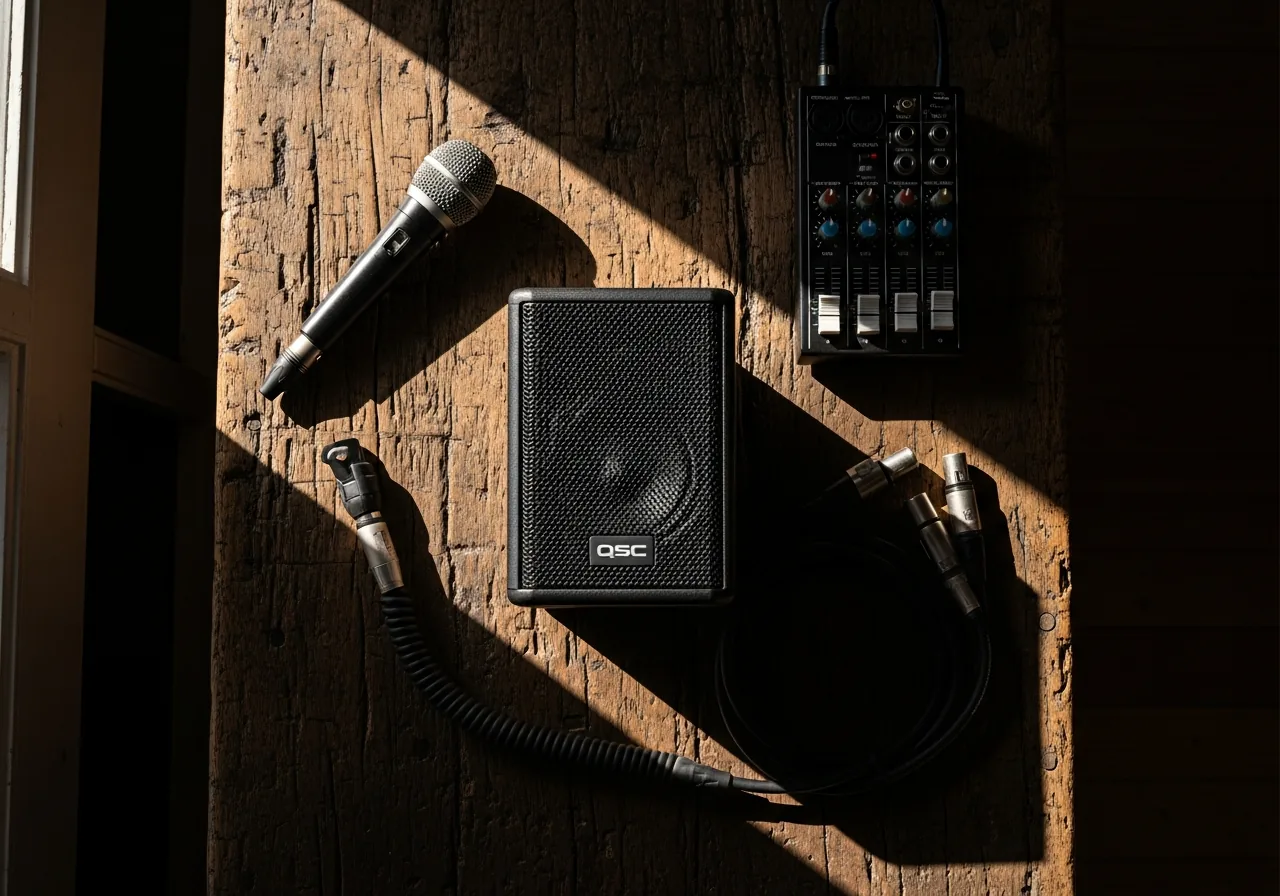
Of course, there are exceptions. We’re not dogmatic about the number two. Sometimes, a single speaker is the perfect, elegant solution. The decision comes down to the specific application. For a simple wedding ceremony in a small Paddington courtyard or the Royal Botanic Garden, a single speaker is often all you need. The goal here is vocal clarity for the celebrant and vows, plus some light, ambient music as guests arrive and depart. A single, discreet QSC K8.2 on a stand can cover a group of 50 to 70 guests for this purpose without being visually intrusive.
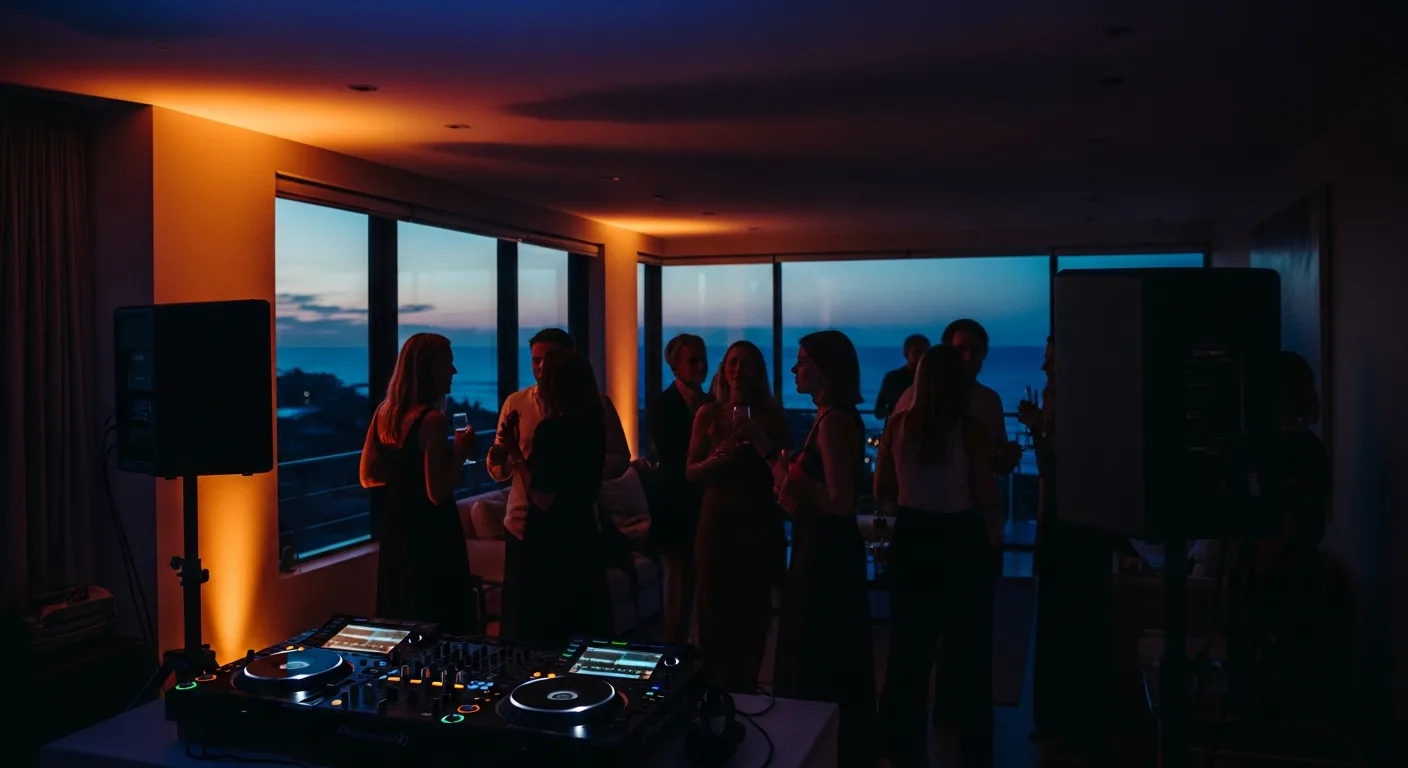
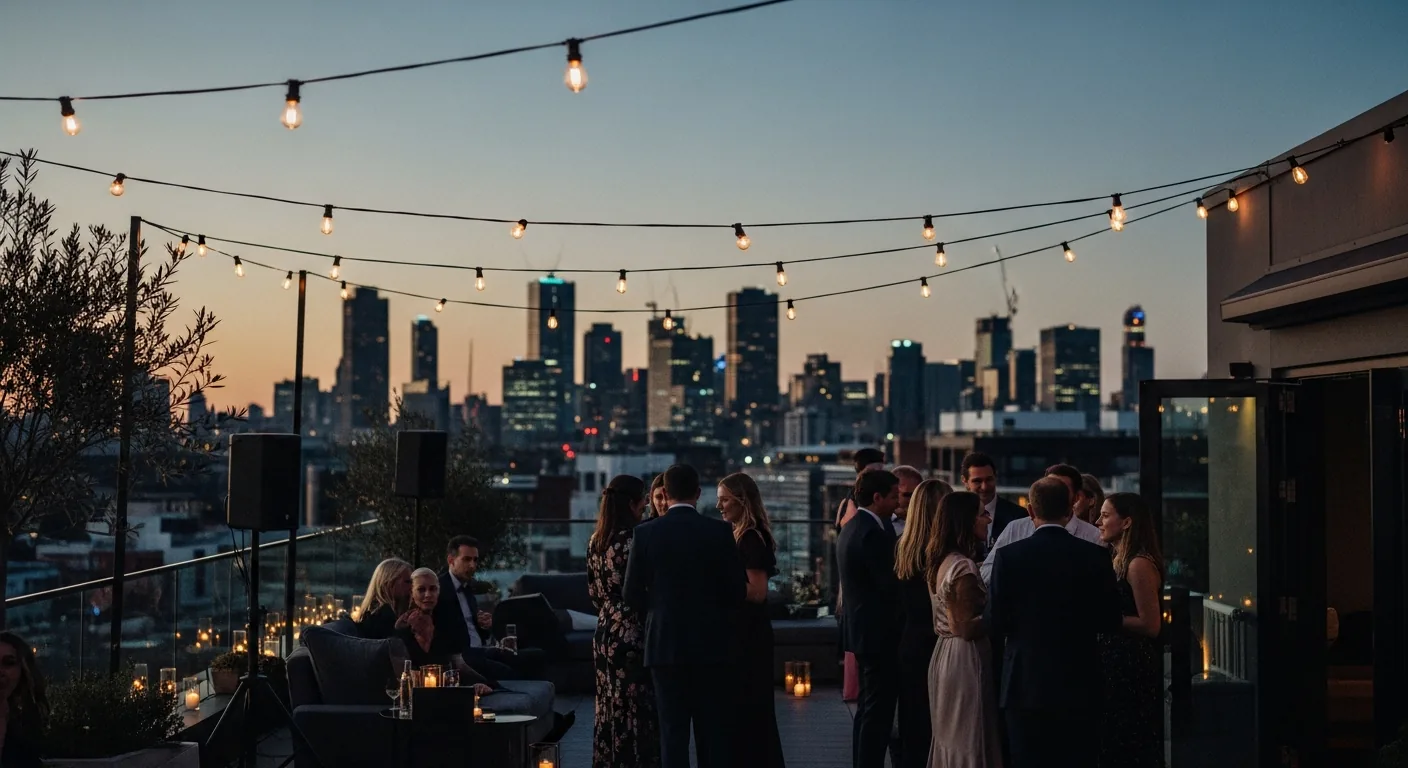
The same logic applies to very intimate receptions or parties. If you’re hosting a 40th birthday for 30 people in a Double Bay apartment or a small product launch on a corporate rooftop, one speaker provides more than enough power and coverage. If the primary need is background music and a microphone for a quick speech, a single speaker is a simple, cost effective choice. But the moment a dance floor becomes the focus, you should be thinking in pairs again.
Your Pre-Hire Checklist
To give you the best recommendation, we don’t just need to know the date. We are interested in the operational details of your event, because that is what determines the right equipment. Before you call or email for a quote, having the answers to these questions will get you a faster and more accurate answer.
- Guest Count: What is your best estimate for the number of attendees? This is the single most important factor.
- Venue Details: The name and address. We’ve delivered gear all over the Eastern Suburbs and greater Sydney since 1999, so there's a good chance we already know the room's layout and acoustic challenges.
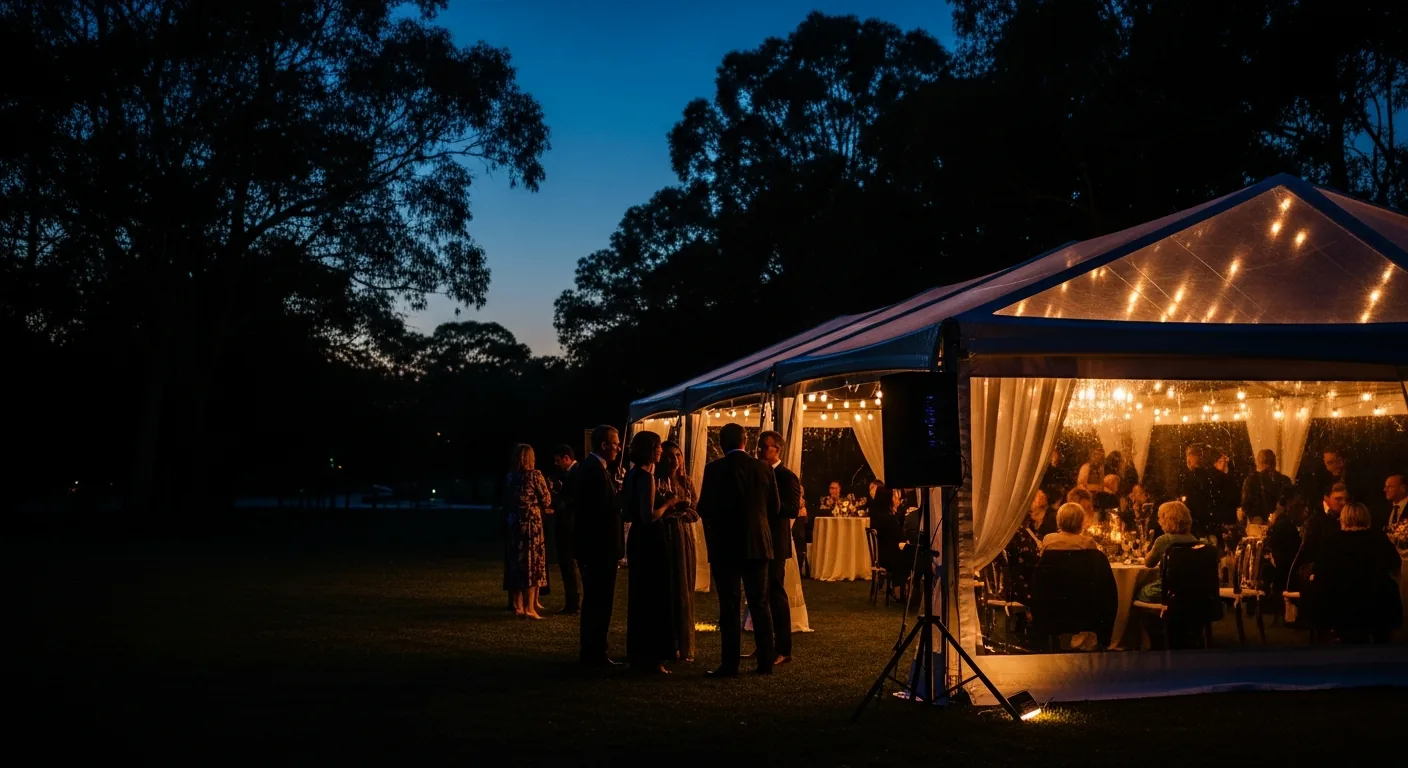
- Event Location: Is it entirely indoors, outdoors in a marquee, or a mix of both? A summer event on a Bronte terrace has different needs than a winter reception indoors.
- Audio Sources: What will be playing through the system? A DJ with decks, a live duo, a laptop with a Spotify playlist, or just microphones for speeches?
- Dance Floor: Is there a dedicated area for dancing? This tells us whether we need to focus the sound energy in one spot.
- Power Access: Can you confirm there is reliable access to standard 240V power outlets near where the speakers will be set up?
- Zoned Audio: Do you need sound in separate, distinct areas? For example, background music for canapés on a lawn and louder music for the main reception inside.
- Venue Restrictions: Are there any noise restrictions we need to be aware of? This is common for residential venues in Vaucluse or venues near apartments.
Four Speakers and Beyond: For Large or Awkward Spaces
So when do you need more than two speakers? The answer is when you have a very large guest count (over 200) or a challenging room shape. Think of a long, narrow restaurant space or a large, L-shaped function centre. In these scenarios, trying to cover the whole area with two big speakers from the front creates the same problem as the single speaker, just on a larger scale. The front is deafening, the back is a muddy echo.
The solution is what we call a distributed system. Instead of two powerful speakers, we might specify four smaller powered speakers. We would place one pair at the front near the stage or DJ, and a second pair on 'delay' about halfway down the room. This second pair receives the audio signal a few milliseconds later, reinforcing the sound from the front. The result is crystal clear audio at a consistent, pleasant volume from the front row to the back wall. Everyone feels included, and nobody gets their ears blasted.
Our rule of thumb for distributed audio: we place delay speakers so they are aimed at the furthest listener from the previous set of speakers. This creates overlapping fields of sound, not just isolated pools of noise. For outdoor events on the coast, like at Tamarama Surf Club, we also have to factor in wind and the ambient noise of the ocean. This often means we position speakers slightly more aggressively and with more focused angles than we would for an indoor event.
This approach is also perfect for weddings with multiple zones. We can set up two speakers like the QSC K10.2 for the main dance floor inside a marquee, and run two smaller speakers outside for the bar and lounge area, all playing the same music at different volume levels.
The Subwoofer Question: Do You Really Need One?
This is a question we get all the time. A subwoofer is a specialised speaker designed to reproduce only the lowest bass frequencies, the kind you feel in your chest. Our position is straightforward: if you have a DJ and expect a proper dance floor to kick off for 80 or more people, you should hire a subwoofer.
Without one, your main speakers have to handle the entire frequency range, from the highest treble to the lowest bass. When you push the volume for dancing, this can make them sound strained. Adding a subwoofer takes the heavy lifting of the bass off the main speakers, letting them focus on the midrange and high frequencies. The result is a system that sounds cleaner, punchier, and can go much louder without distortion. It’s what transforms a sound system from just playing music to creating a real party atmosphere. Many of our wedding packages include a subwoofer for exactly this reason. For ceremonies, background music, or speech-only events, it's complete overkill.
For most Sydney weddings of up to 150 guests, two quality speakers are the foundation of a great sound system. Add a subwoofer if you’re serious about the dance floor, and expand to a four speaker system for large or unusually shaped venues. This is the logic we use every day to build quotes for our clients. If you tell us about your wedding plans, we will tell you exactly what gear you need.