Eastern Suburbs Venue Sound Checklist: Bondi, Coogee, Bronte and Beyond
Every Eastern Suburbs venue has its own sound quirks. Salt air, stepped terraces, noise bylaws, power limits. Here is what we check before every local gig.
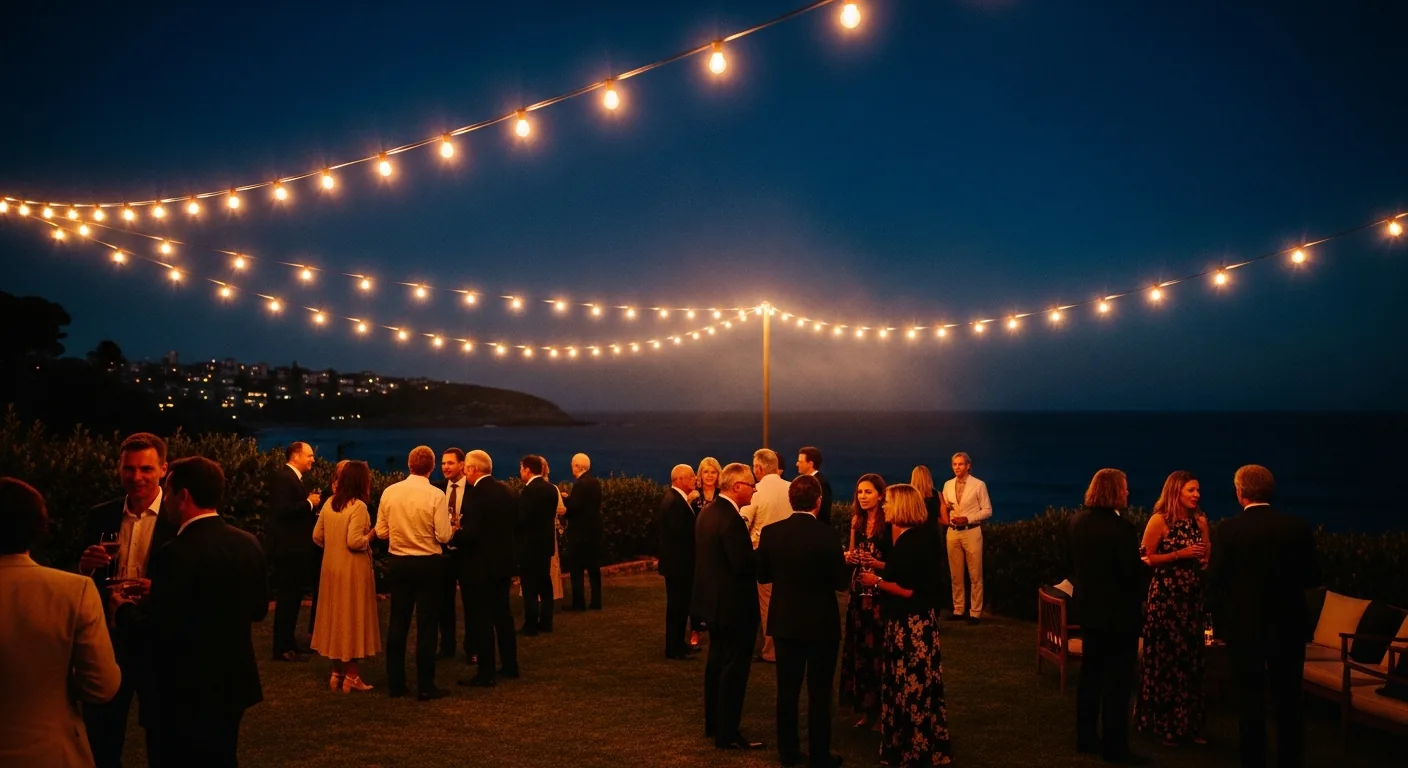
You’ve booked the perfect Eastern Suburbs venue. The view from the Coogee Surf Club is spectacular, the courtyard of that Paddington restaurant is intimate, and the marquee you’re planning for a Vaucluse wedding is a blank canvas. But the one thing that separates a memorable event from an awkward one is sound. A beautiful space with bad audio is just a pretty room where no one can hear the speeches and the music sounds like a cheap transistor radio.
The Outdoor Challenge: Backyards, Terraces, and Marquees
Hosting an event outdoors in Bondi or Bronte seems simple until you turn on the music. Sound behaves differently without walls. It doesn't bounce around and fill the space; it just disappears into the sky. That speaker system that seemed overwhelmingly loud in our warehouse will sound surprisingly thin on a lawn, especially once 50 people are talking and laughing.
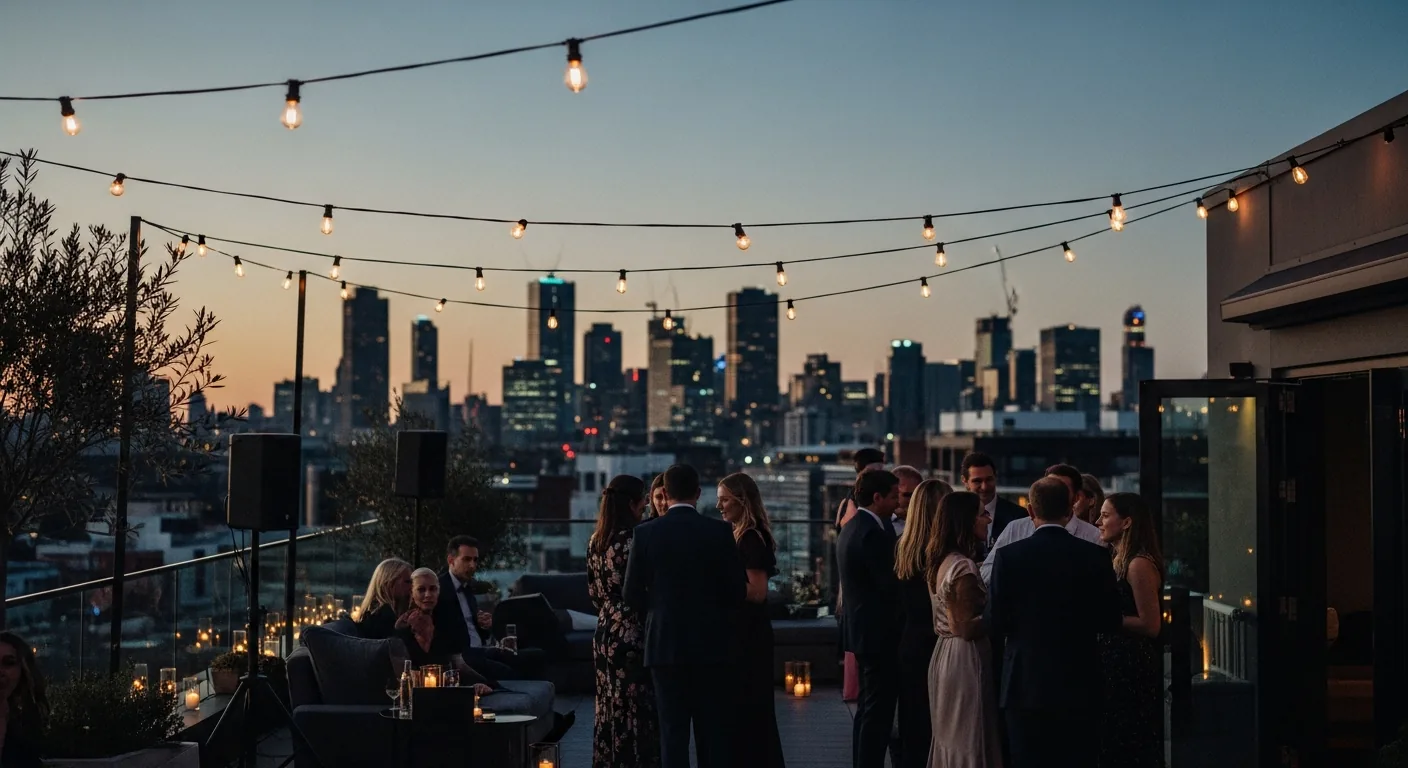
The number one mistake people make is underestimating the power they need. For a milestone birthday in a Tamarama backyard or an engagement party on a Rose Bay terrace, you're not just competing with guest chatter. You're fighting the wind, the waves, and the general ambient noise of Sydney. For any outdoor event with more than 30 guests where music is the focus, a pair of 12-inch speakers is the absolute minimum. For 50 or more guests, or if you want the music to have any real impact, you need 15-inch speakers and a subwoofer. A sub isn't just for nightclub music; it fills out the low-end frequencies that get lost first outdoors, making all music sound richer and fuller, even at low volumes.
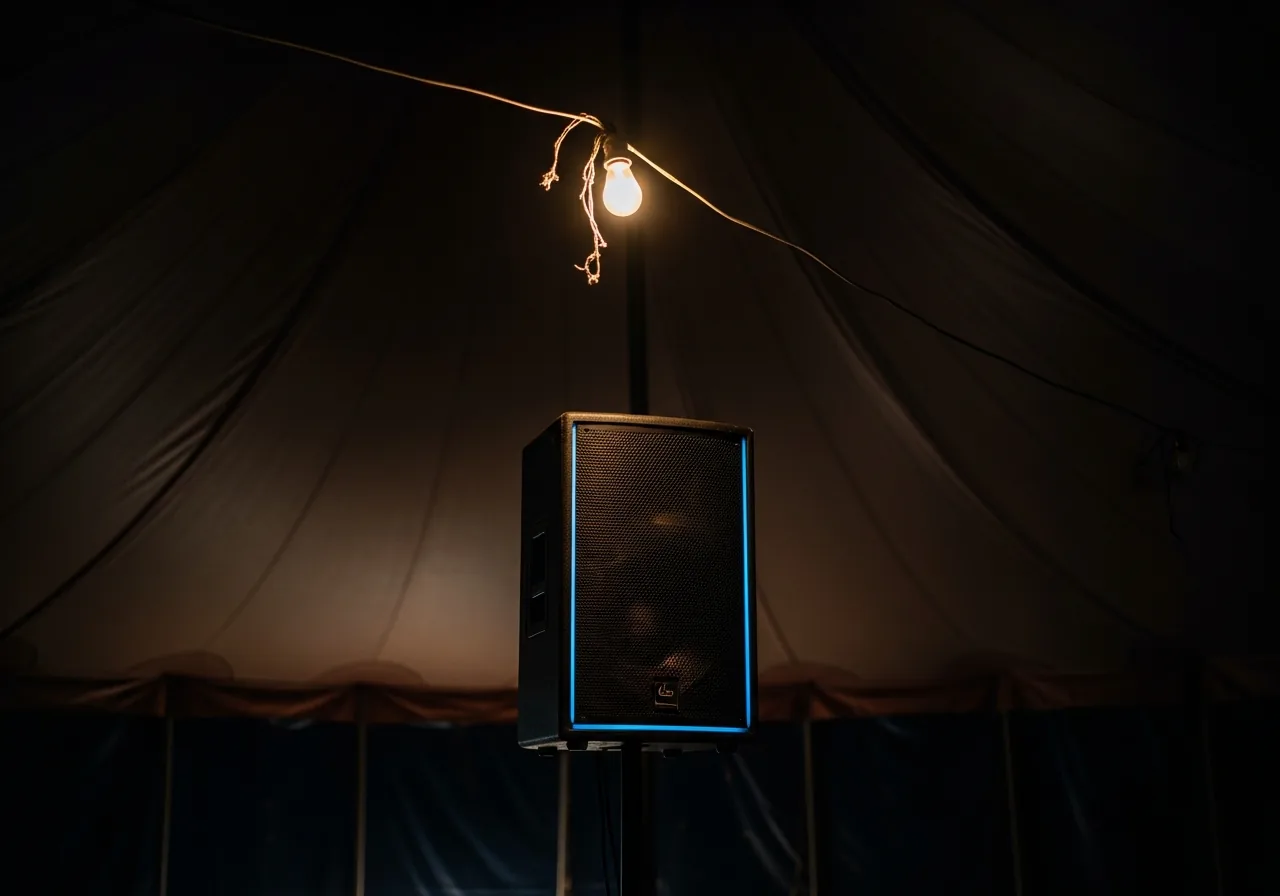
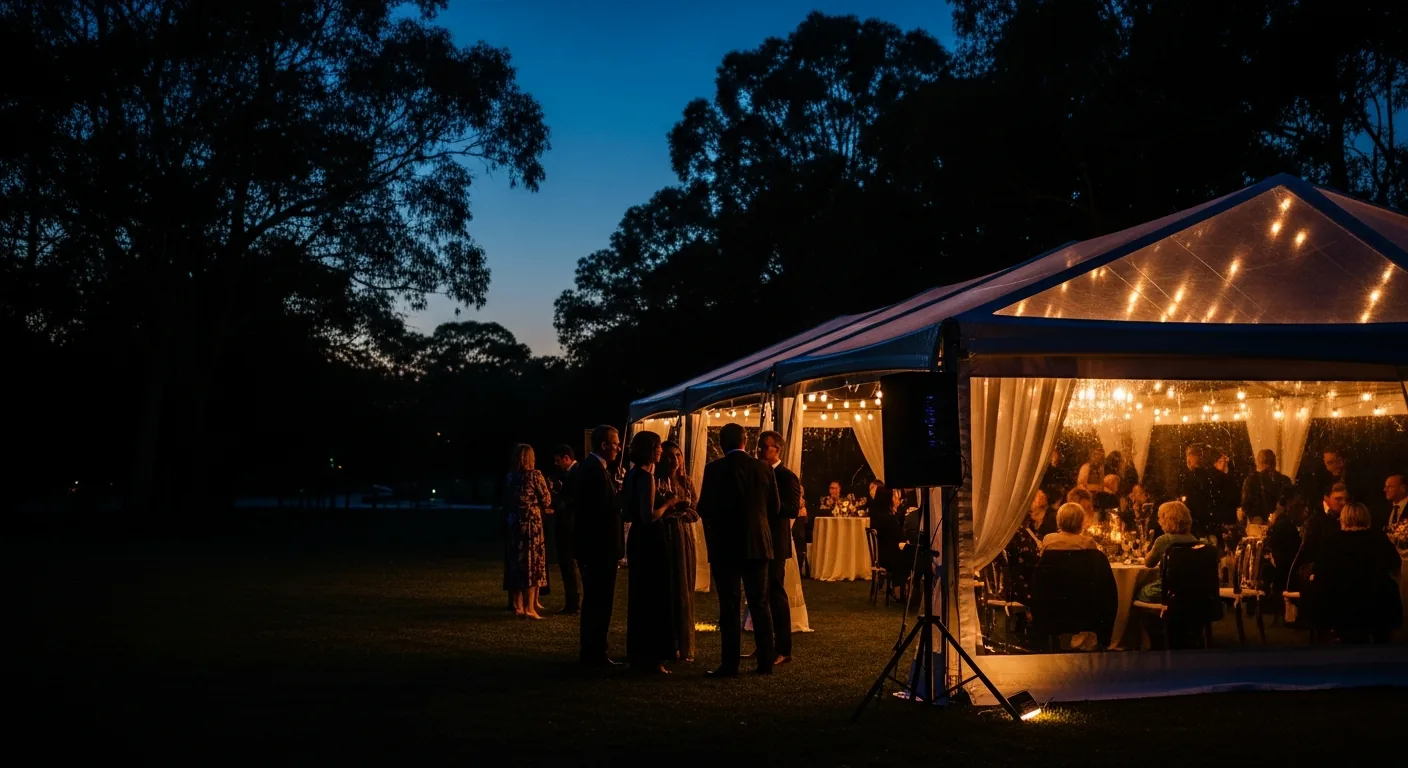
Marquees present their own unique issues. They are essentially giant tents. The soft walls and ceiling absorb sound, which is good for reducing echo, but it also means you need more power to fill the space. For a wedding in a marquee, we always recommend a four-speaker setup. Two speakers at the front for the dance floor and speeches, and two smaller speakers on stands halfway down the marquee for background music during dinner. This gives you even coverage without deafening the people at the front.
Inside Jobs: Surf Clubs, Community Halls, and Restaurants
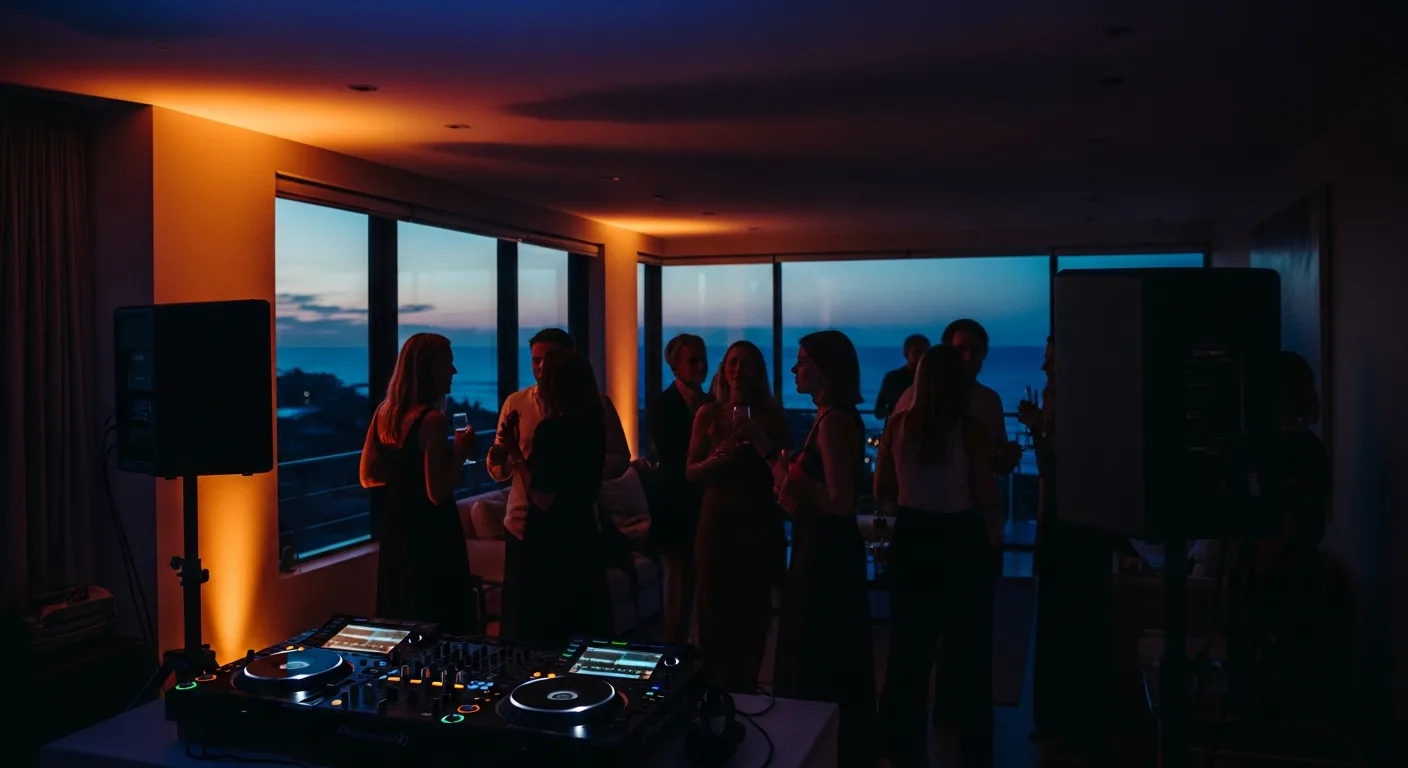
Moving the party indoors doesn't automatically solve your sound problems. It just changes them. The classic Eastern Suburbs venue, from a local community hall to a beach club, is often a box of hard, reflective surfaces. Think polished concrete floors, large glass windows looking out to the ocean, and hard plasterboard walls. These are acoustic nightmares.
In a room like this, sound waves bounce around uncontrollably. The result is a mess of echo and reverb that makes speech difficult to understand and music harsh and fatiguing. Turning the volume up just makes the problem worse. The solution here isn't more power; it's better placement and control. For a corporate event at a venue with lots of glass, we’d rather use four smaller speakers placed strategically than two large ones blasting from the front. This allows us to run the system at a lower overall volume while ensuring everyone can hear clearly.
When you're looking at an indoor venue, clap your hands loudly. Do you hear a sharp, metallic echo? That's a warning sign. The more people you add to the room, the more that sound will be absorbed, but you need a system that sounds good during the sound check in an empty room and even better when it's full. This is a key reason we use high-quality powered speakers from brands like QSC and RCF. They provide clarity and control, which is exactly what you need to tame a difficult room. You can see the models we trust in our speaker range.
Power, Placement, and People
Once you’ve assessed the venue, you need a practical plan. Getting professional sound is less about the brand of the speaker and more about the fundamentals: having enough power, putting it in the right place, and accounting for your guests.
Our rule of thumb is this: for speeches, you need coverage. For music, you need power. Never try to make one speaker do both jobs poorly. It’s always better to have four speakers running at 50% volume than two speakers screaming at 100%. The sound is more pleasant, the coverage is more even, and you have headroom to turn it up later in the night without distortion.
Before you even book your PA system, walk through the venue and make a checklist. This is the same process we go through, and it ensures there are no surprises on the day. From Rose Bay to Maroubra, these are the delivery areas we cover, and this checklist works for every single one of them.
Venue Sound Site Check
- Power Points: Where are they? Are they easily accessible? Are they on a circuit that’s shared with the catering, bar fridges, or lighting? Nothing kills a party faster than tripping a circuit breaker.
- Surfaces: Look at the floor, walls, and ceiling. Are they hard (glass, concrete, tile) or soft (carpet, curtains, acoustic paneling)? Hard surfaces mean you need more control over the sound.
- Guest Flow: Where will people congregate? Where is the bar? Where will the speeches be made from? The speakers need to be aimed where the people are, and not blocked by pillars or furniture.
- Access for Setup: How will we get the gear in? Are there stairs, narrow corridors, or a difficult loading dock? Clear access saves time and hassle for everyone.
- Ambient Noise: Stand in the space and just listen. Can you hear kitchen noise, bar staff, a busy road, or air conditioning units? Your sound system will need to be clear enough to cut through this without being offensively loud.
- Weather Contingency: For any outdoor or marquee event, what is the plan if it rains? Is there a safe, covered spot for the speakers and mixing desk? Salt air and humidity near the coast are also tough on electronics, which is why our gear is rigorously tested and maintained.
Corporate Sound is Different
A corporate product launch in a Paddington art gallery has completely different audio needs from a 50th birthday party. For private parties, the goal is often good-sounding music and intelligible speeches. For corporate events, the absolute priority is crystal-clear speech. If the CEO's message is muffled or the microphone cuts out during a presentation, the entire event is a failure.
This means the equipment choice is different. For a presentation, a lectern microphone and a wireless lapel or headset microphone are standard. These are designed to capture a single voice clearly and reject background noise. The speaker system should be set up for vocal clarity, which sometimes means reducing the bass frequencies to improve intelligibility. We always provide a small mixer for corporate events so we have fine control over the levels of different microphones and any presentation audio from a laptop.
A company Christmas party, on the other hand, is basically a private party that your boss is paying for. The focus shifts back to music, and the system needs the power and low-end response to create a fun atmosphere. The key is to know what the primary purpose of the sound system is. If it's 90% speech, you build a system for that. If it's 90% music, you build a different system. Trying to find a cheap middle ground compromises both.
Choosing the right sound system is about matching the equipment to the specific challenges of your venue, not just the number of guests. A surf club in Coogee, a backyard in Bondi, and a corporate office in the city each demand a different approach. The best way to get it right is to plan for the space you have. If you tell us about your venue and your event, we can tell you exactly what you need, so get in touch and we can help you plan.